Essential Question

Essential Question: What is most important to rehabilitating a skier or snowboarder after a traumatic injury?

Saturday, December 28, 2013

Mentorship Hours

This month I have been doing a lot of mentorship hours since we actually have snow. My mentorship has been great. I've learned all sorts of new stuff and have gotten to do all sorts of cool stuff. On my first day of mentorship I picked up obstacles and helped put up fencing and rope lines. The next day I went to my mentorship I got to take my friend down in a toboggan. This was just plain awesome! It was really fun because my mentor was egging me on to go faster and my friend was just in the toboggan screaming the entire time. I also refilled my vest with medical supplies. Some of the medical supplies that I included were bandaids, slings, roller gauze, medical tape, and trauma blankets. This made my vest so much fatter and heavier, but that's a good thing. The next day I went up was on Christmas for a couple of hours and I helped put up rope lines and clear off obstacles off the runs. I got to practice my clove hitch knots for this because its the knot we use to put up rope lines. The last day I went up, I trained a new guy. I showed him around and where all the runs were even though they aren't open. I showed him what to do like pick up obstacles, make sure people that are laying down on the runs are okay, make sure all of the fencing and rope lines are up when you go by them, and make sure everything is good to go. I also got to use my own radio for the very first time. This was interesting because it's a really heavy radio and I put it in my radio harness and every time someone would talk over it I got scared because I forgot it was there. I also blocked off the terrain park while they groomed it. At first I blocked it off physically because I was waiting for a drill. Then I put up rope lines and got to use the drill for the very first time. I drilled holes in the snow and then put PVC pipes and bamboo in the holes and then secured rope to the pipes and bamboo by using the clove hitch knot. 

Here's a link to the video of me taking my friend down in the toboggan:
https://docs.google.com/file/d/0B0VxWzGQBDFaVjBzdEN6WUxpNjQ/edit

All the supplies in my vest. There is a trauma blanket, 8 4x4 gauze pads, 4 rolls of gauze, 3 rolls of medical tape, an assortment of bandaids, 3 pairs of gloves, a wet wipe, 6 carabiners, 2 pocket knifes, 1 whistle, and 2 mouth pieces for CPR.  

This is the fencing I helped put up. This is used for making sure customers don't go into areas they aren't supposed to. In this case it's used to block off the gulch that isn't covered in snow.


Thursday, November 21, 2013

Blog 9: EQ


Content

1.   Review this.  Confirm by stating "I reviewed the rule of three for writing an EQ."
Essential Question 
Once a topic is chosen, the student will develop a working essential question.  The purpose of the working essential question is to help the student build a strong foundation of research which will allow him or her to create an essential question that encourages depth and rigor in the chosen topic.  An essential question must:

  • Provide a framework for studies (It calls for breadth and depth of research, Is not a yes/no question)
  • Takes a stance (Allows you to argue some point, Cannot be a recitation of facts or a list)
  •  Format (It is specific, The wording makes sense)
I reviewed the rule of three for writing an EQ. 

2.  Review the following EQs and
  • Tell us if it meets the rule of 3 criteria.
  • Tell why it does or why it doesn't
 a.  What is the most important factor in healthy weight loss?
No this does not meet the rule of 3 criteria because its doesn't give a specific requirement, you would need to give a specific age group. Without the specific age group this question just presents a multiple answer stance. A better question wold be " What is the most important factor in healthy weight loss for adults ages 20-30?" 

 b.  What is most important to securing a conviction in a criminal investigation?

Yes this meets the rule of 3 criteria. It has great wording. It also leads to a lot of questions to be asked that allows a stance to be taken.

 c.  What is most important in creating a hairstyle that best satisfies a customer?
Yes it meets the rule of 3 criteria because its very specific when it says "satisfies a customer"

 d.  How can an Anesthesiologist best treat chronic pain?
This meets the rule of 3 criteria because its very specific because it uses words that can be defined. There's a lot of room for research and exploration to finding a side. 

3.  Based on your review of the rule of 3 and your experience with assessing four EQs, please write another draft EQ for your senior project.
What is the best way to treat a patient during the golden hour after a traumatic injury. 

Monday, November 4, 2013

On the Hill Day: November 2, 2013

On Saturday, I spent 9 hours reviewing my skills. There were several stations that I had to rotate through. When I arrived on the mountain, I checked in and paid my associate's due, read and signed the mountain's policies, and took my picture for my season pass. Next, I went on the ski lift to the top of the mountain. When I arrived on top, I waited for the refresher to start.
The first station I went to was CPR(CardioPulmonary Resuscitation). Since I already had my CPR card I just reviewed my skills and listened on to the lecture. The instructor Tom Bates, taught adult, child, and infant CPR. The first thing you want to do for adult CPR is shout and tap the patient so you can check for alertness. For adult CPR, you want to first call for help and an AED(Automated External Defibrillator). Next, you want to do three sets of 30 chest compressions by placing both of your hands on the breastbone and 2 breaths. Until the AED arrives continue your chest compressions and breaths. If someone arrives with an AED immediately take action and use it. Child CPR is the same as adult CPR. For infant CPR, its slightly different. The first thing you want to do for infant CPR is check for alertness by tapping and shouting at the patient. Next, call for help by calling for back up and 9-1-1. Next, turn the infant on its back. Then, you can begin chest compressions by placing two fingers on the breastbone and you give 30 chest compressions. Then you give 2 breaths. You continue this cycle for 3 cycles or until help arrives. We also learned what to do for a choking patient. We learned how to give back blows and how to do the heimlich maneuver.
The next station I went to was IIPP(Injury and Illness Prevention Program), Medical Exposure Records, Infect, Control, Emergency/ Fire, Job Hazards, and PPE(Personal Protective Equipment). This station was to talk about the mountains policies for different emergencies. IIPP is what to do during different types of injuries and illnesses and who to contact. The Medical Exposure Records is for when someone is exposed to chemicals and what to do and who to contact. Emergency/ Fire is the emergency route in case of a fire and what to do when and if there is a fire. Job Hazards includes any chemicals or anything that is a hazard to anyone that works on the mountain. PPE is what equipment to use, when you help a patient to keep your own safety and protect yourself. This equipment includes gloves, safety goggles/glasses, helmets, ear plugs, steel toed boots, and jackets and garbs.
The next station I went to was Incident Investigation Patrol Specific Policies. This station was to talk about Incident Investigations and the different reports you have to fill out for different incidents depending on what happens. They showed us what to do and the instructions to take when you have to do an investigation.
The final station I went to was Ropes and Chair Evacuation. In the ropes station we learned how to tie different knots. The knots we learned how to tie were the Figure Eight knot with the follow through on and off a bite. This knot is used for belaying someone off a chair. The next knot we learned how to tie was a Clove Hitch which is used for doing rope lines for lift lines. The next knot we learned how to do was the Munter Hitch. This knot is similar to the Clove Hitch and it can be used for belaying someone off a chair. We also learned how to tie knots with webbing. We learned how to do a follow through overhand knot with webbing, which is used for making a chest harness or a diaper. Next, we learned how to make a harness using webbing. I thought this would be really hard but it was relatively simple. Finally, we moved on to the Chair Evacuation. Connor( another Junior Patroller) and I went on one of the chairs and Pro Patrollers rescued us off the chair, using standard chair evacuation precautions. It was really cold on the chair but this was the funnest station. Being belayed off of the chair on a t-bar was kind of sketchy but really fun.
This is chest compressions for adult/child CPR.
This is chest compressions for infant CPR. 
This is an AED. An AED is really simple to use you turn on the power button and then follow the directions that the AED tells you. 
These are basic PPE that workers that are exposed to nasty stuff or that are in danger use. 
These are the knots that I learned how to tie during the Ropes station. 

This is a piece of webbing. 

This is the overhand follow through knot I learned how to tie in order to make a chest harness or a diaper.
This is a harness made out of webbing. 
This is Connor being evacuated off the chair using standard chair evacuation precautions. 

Connor sitting on the t-bar, while he is being evacuated off the chair. 
Pro Patrollers lowering Connor down off the chair during the chair evacuation. 
Equipment needed for a chair evacuation. 
The pretty view on the way down from On the Hill Day. 

Pretty view down chair 1.
Best view ever. :) 

Schedule for On the Hill Day 2013.

Sign off sheet before it was all signed.
All the signatures for the different stations for On the Hill Day 2013. 


Tuesday, October 15, 2013

Adventures in My OEC Class!

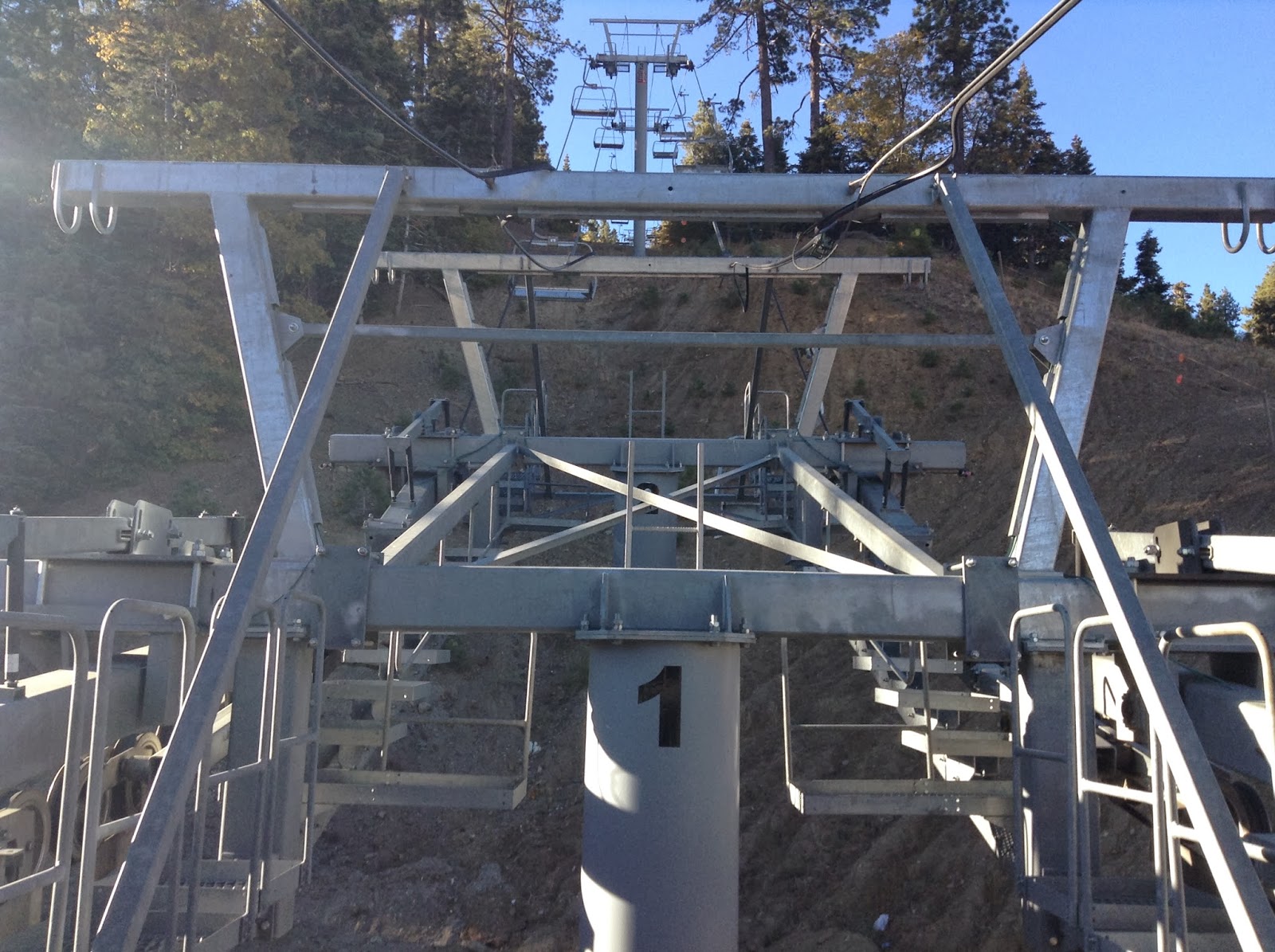
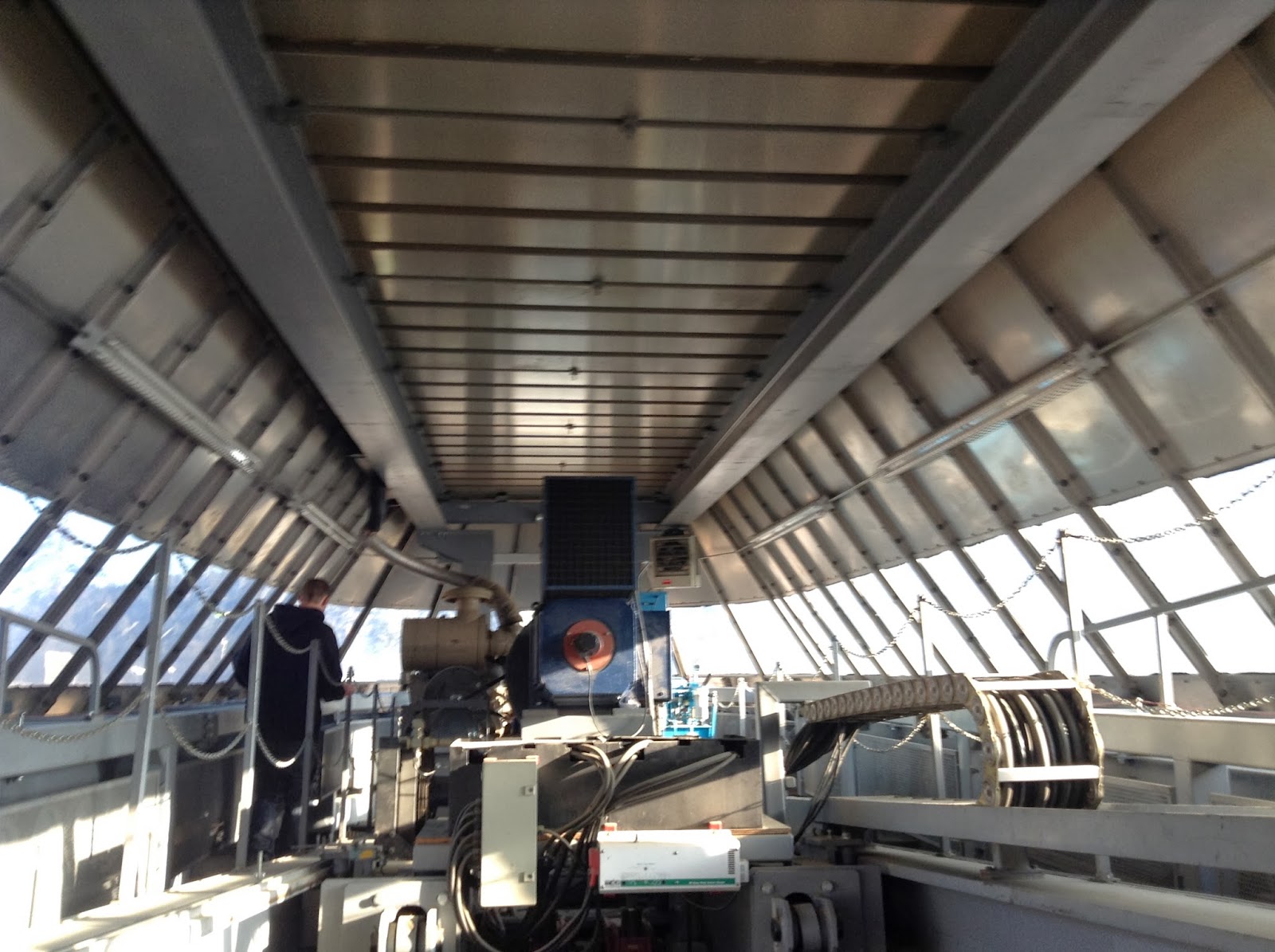
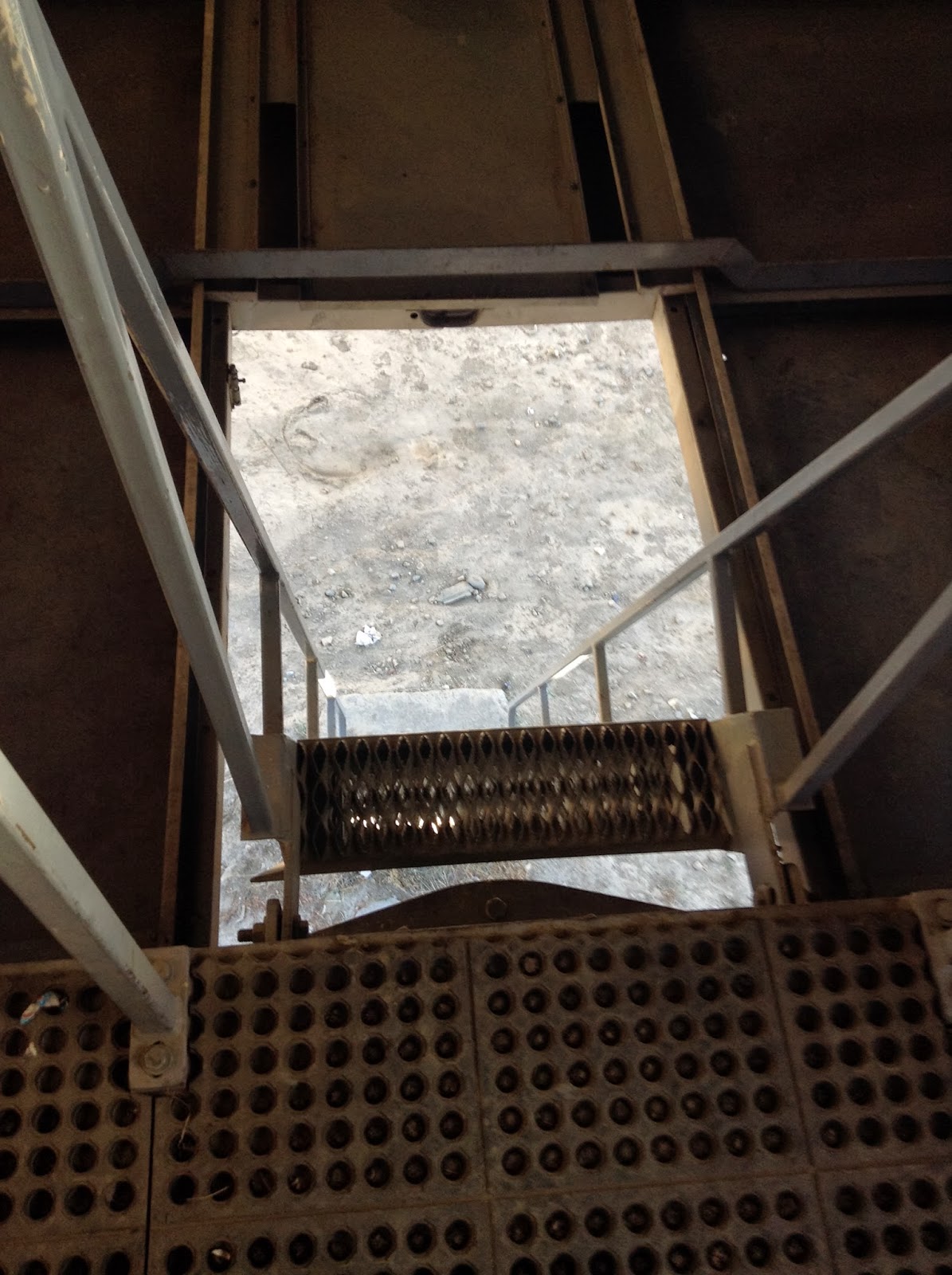
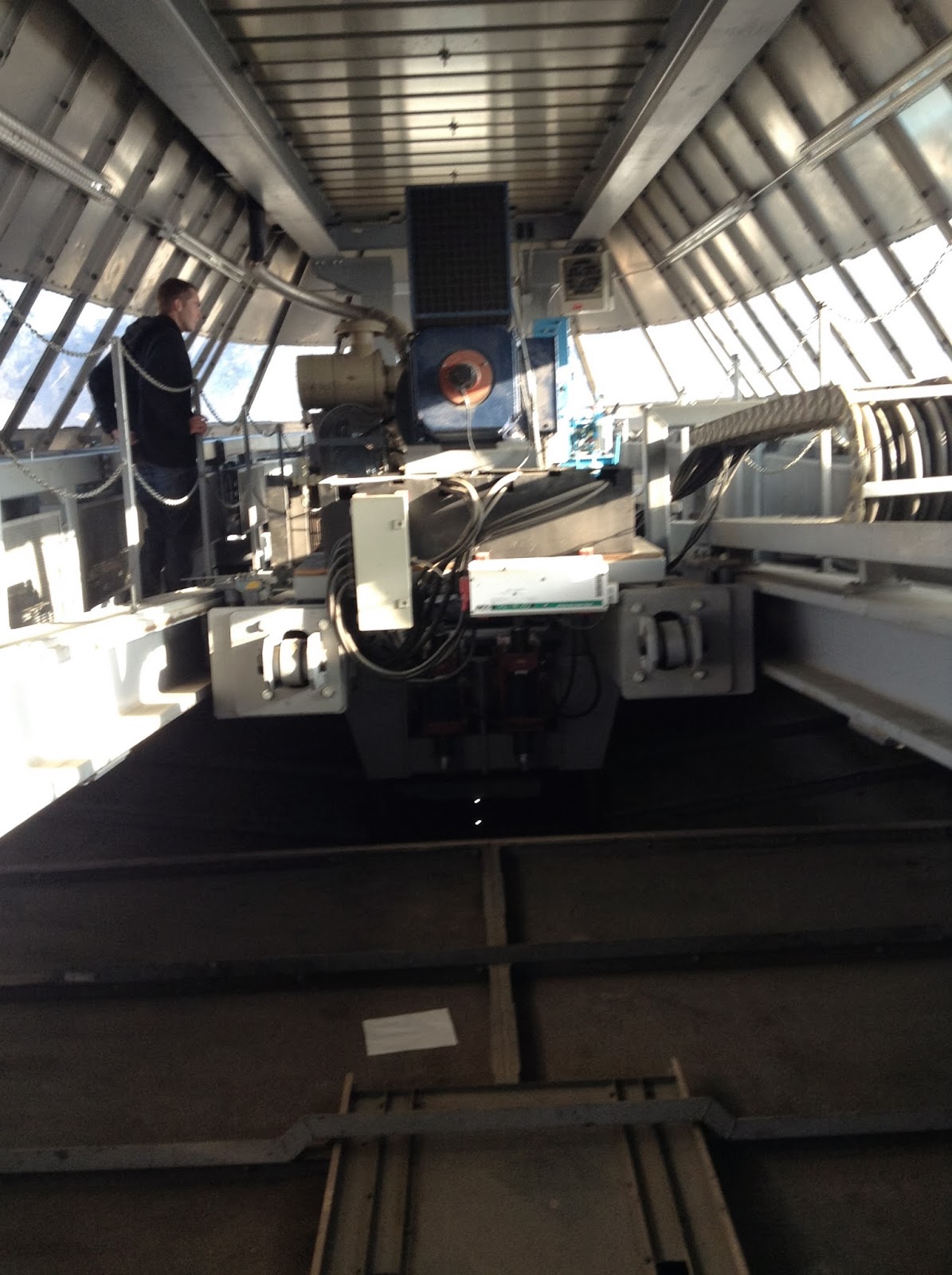
This month in my OEC class we did some pretty awesome stuff! One Sunday, I got to go in one of the lift tower maintenance rooms. This was really interesting. We looked around inside and saw how the chair slows down when you get on and off the chair. The chair slows down because as it goes around the bull wheel it actually detaches itself from the wire and once it gets past a certain point, it reattaches itself onto the wire. While we were in the maintenance room, we saw where the control panel was and where everything was. We also got to go out on the ledge of the tower and look out. This was kind of sketchy because the grate was loose, but it was still really awesome. After we got to tour around the lift tower maintenance room we went inside the connex, where Mountain High Ski Patrol stores most of their medical supplies. It was a mess but there were so many supplies, it was interesting to see. We got all the supplies we needed for the day and then we practiced our skills and prepared for the upcoming test by going over multiple choice questions.

Looking out on the grate towards the top of the lift. This was sketchy but fun!

An inside view of the lift tower maintenance room. It looks like an alien ship from the outside.

The ladder to go up and down the lift tower maintenance room. Don't go near the light!

Another view of inside the lift tower maintenance room.
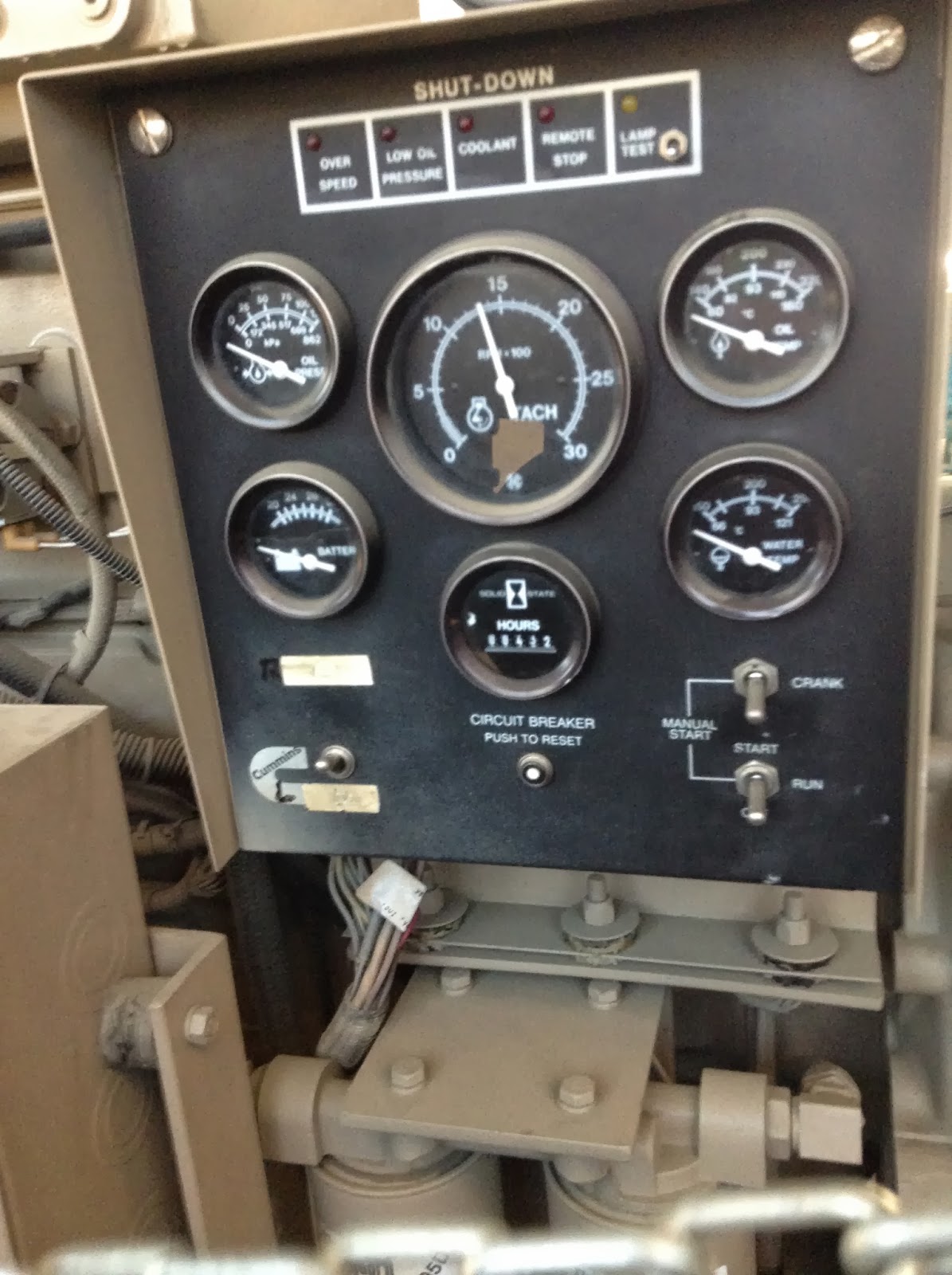
The gauges that tell you what the lift is running low on and when you need to shut down the lift.

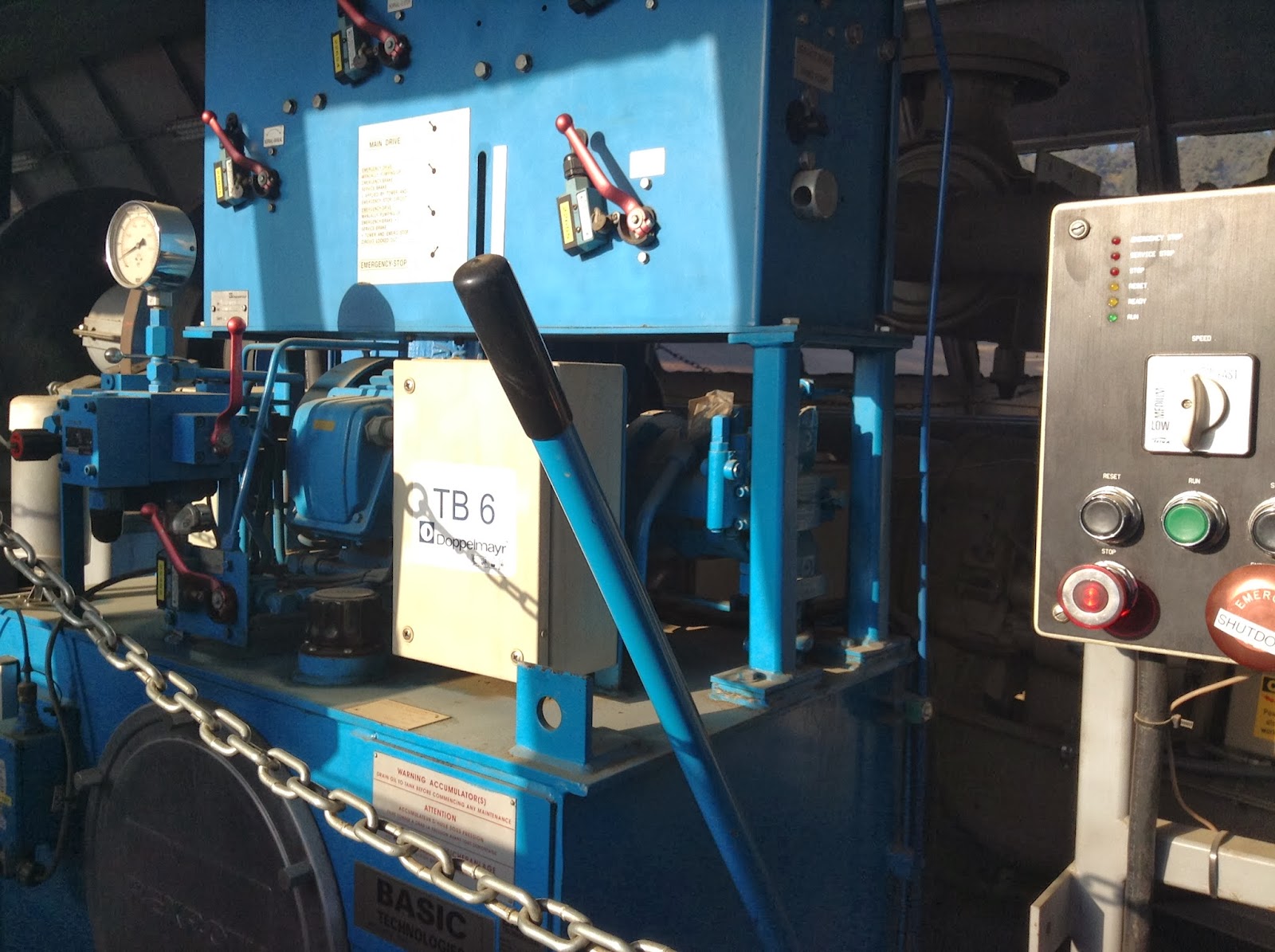
The control panel in the lift tower maintenance room.

The last day of my OEC class was test day. It also just happened to be On the Hill Day for Mountain High Ski Patrol as well. There were a lot of patrollers on the mountain, but I thought it was pretty cool. I've always enjoyed On the Hill Days at Baldy, so it was interesting to see how Mountain High does their On the Hill day. When I first arrived we did our 100 multiple choice test, which was easier than I thought it would be, but yet still hard. They gave us 2 hours to complete this, but all of us finished right around the hour and a half mark. After we finished the test, we looked around at different booths that had skis, boots, and snow clothes. We also watched a video on ACL injuries, this was really gnarly! After we finished looking around one of the patrollers said that we should go watch a lift evacuation, so we all hiked up half a mile to watch how to do a lift evacuation. My instructor,  Trevor demonstrated how to do this skill. I've seen and participated as being a patient in a lift evacuation at Baldy, but Mountain High used a different method than Baldy, so this was interesting and cool too see the two different perspectives. After we finished watching the lift evacuation, we hiked back down and they tested us on two different scenarios. The first scenario we got was "someone who hit a box skiing and got an impaled object in their hand and had a difficult time breathing." We took turns being the patroller helping our patient. We had to figure out what was wrong with out patient and help them breathe and stabilize the impaled object. The next scenario we got was "someone who hit their head and was altered and feeling nauseous and had elbow pain." Again, we took turns being the patroller assessing our patient. We had to take standard c-spine precautions and figure out what was wrong with out patient. After we finished the two scenarios, we were tested on five different skills. I was first tested on splinting a humerus fracture. They tested us orally on how we would take standard precautions and the materials that we would use. The next skill I was tested on was administering oxygen. The person testing me tested me on how to administer oxygen using a nasal canula, a non-rebreather mask, and a bag valve mask and how to use a suctioning device. The next skill I was tested on was boot removal. He tested me on how I would take off the boot using a rolling motion and how I would use an additional patroller to hold manual stabilization of the leg. Then I was tested on helmet removal. He tested me on how I would use additional resources to hold manual head stabilization and how I would use a rolling motion to remove the helmet. The last skill I was tested on was a distal femur fracture( the coolest thing ever in my opinion!). During this skill, the person tested me how i would assess the patient and how I would use a Hare traction splint to splint the leg and to pull traction. He made sure I knew the different key factors like having someone pull manual traction on the affected leg and sizing and applying the Hare traction splint. After we ran through all the skills the testers told us if we passed or not. I passed so I am now officially OEC certified and considered an OEC Technician. I am now just waiting for my certification card in the mail. The waiting begins.
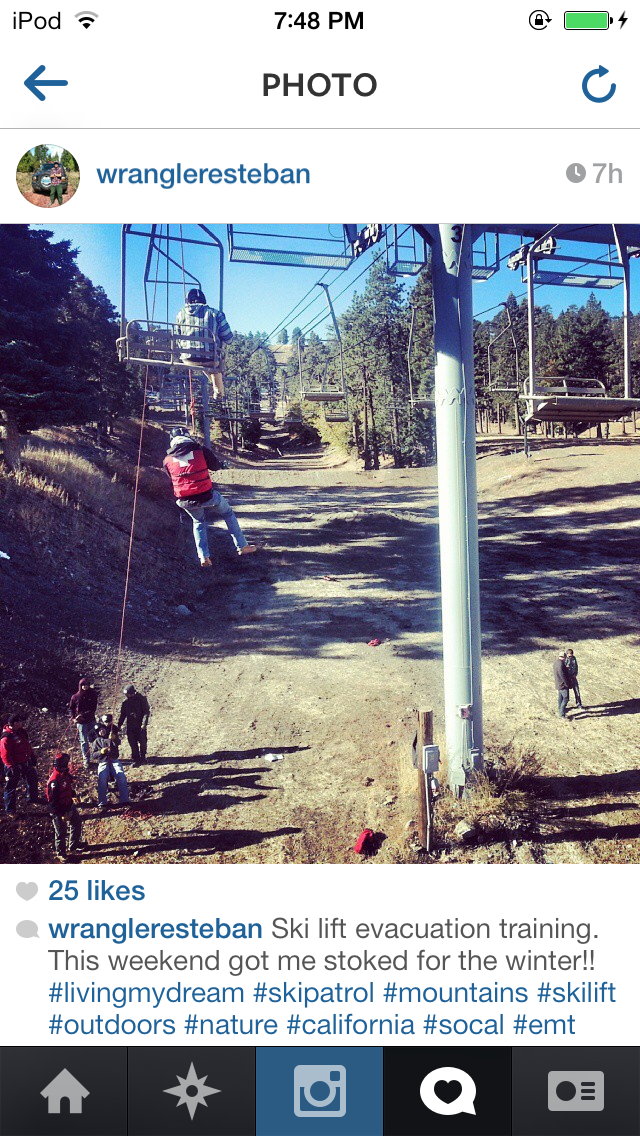
A lift evacuation I saw that was demonstrated by my instructor, Trevor Samorajski.

Monday, October 14, 2013

Blog 8: Research and Working EQ

1.  What is your working EQ?
My working EQ is: What are the top three things you can do to ensure the best care possible for your patient? 

2.  What is a possible answer to your working EQ? Please write the answer in thesis format.  

The first thing you can do to ensure the best possible care for you patient is when you arrive on scene to the call, go through your primary assessment, which includes making sure your patient has an airway, is breathing adequately, has a good circulation, and has no disabilities. After you assess the ABCD's you want to address any life threatening conditions. Once you notice these treat the life threats. Finally, you want to transport your patient to a better environment. All of this is part of the primary assessment.The next thing you can do to ensure the best possible care of your patient is to do a secondary assessment, which includes getting a head to toe examination of your patient by inspection of any abnormalities and deformities, by touching, and listening for respirations and perfusion. Then you would want to gather your SAMPLE History by asking the patient questions of their symptoms and figuring  out their signs, asking if they have any allergies, if they're on any medications, if they have any past pertinent medical history, when they last ate or drank something, and what they were doing leading up to the accident. All of this is part of your secondary assessment. The last thing you can do to ensure the best possible care for your patient is to hand off your patient to a higher level of care like ALS. You want to do this to ensure that they go to a hospital because we can't diagnose anything, we're only here for immediate response and treatment. 

3.  What is the most important source you have used that has helped you come up with an answer to your working EQ? 
The most important source I have used to come up with an answer to my working essential question is my Outdoor Emergency Care book. This book was written by Deborah A. Endly, David H. Johe, and Edward C. McNamara. 


4.  Who is your mentor, or where are you volunteering, and how does what you are doing relate to your working EQ?

My mentor is David Mix of Mt. Baldy Ski Lifts Inc. He works for patrol and is the manager of the ski patrol at Mt. Baldy. Everything I've been doing has helped me answer my essential question because I've been going on calls and lending a hand for the pro patrollers. While I'm on these calls, I get to see what my fellow patrollers do to respond to a patient in need and that is injured. I just step back and watch and help whenever someone asks me too. 

Monday, September 30, 2013

Blog 7: Independent Component 1 Approval

1.  Describe in detail what you plan to do for your 30 hours.
I plan on taking an Outdoor Emergency Care(OEC) Class for my 30 hours. This class focuses on the basics of first aid for the outdoors and what to do in different situations. This class is almost the equivalent to an EMT class, its just a step under an EMT class. The class description from the National Ski Patrol website is listed below. 
A sequenced, competency-based education program that prepares candidate patrollers and other outdoor rescuers without previous first aid or EMT training to handle the emergency care problems encountered in the non-urban setting. The knowledge and skills learned are oriented toward the wilderness environment, with special emphasis on ski and snowboard injuries, high-altitude and cold-weather illness, wilderness extrications, and the special equipment needed for emergency care and transportation in the outdoor environment. Students are required to participate in comprehensive lessons with skill and scenario application, complete various workbook exercises, take a final written exam, and demonstrate their skills and knowledge in final scenarios. Challenge students and course students are required to demonstrate all the skill performances and complete the same final written exam and practical scenario evaluation.
Here's a link to the class syllabus:
http://mthighskipatrol.org/index.php/13-oec/4-2013-oec-syllabus

2.  Discuss how or what you will do to meet the expectation of showing 30 hours of evidence.
Since this isn't a class that you get a grade for, I won't have a transcript so I plan on showing my certificate of certification. This is a class that you get certified for like a CPR/First Aid class or an EMT class. I;m just going to prove I did my 30 hours by showing my certification. 
3.  And explain how what you will be doing will help you explore your topic in more depth.
Taking this OEC class will help me explore my topic more by giving me more knowledge on first aid and how to respond to different calls/scenarios. In this class they give you scenarios and you work with your group to get the best possible care for your "patient". This helps with understanding how responding and going on a call will feel when it comes down to that.  It will also give me a deeper understanding of how patients will feel because of the hands on experience when I get to be the "patient" for practice. When they give us the scenarios we take turns being the "patient", so we get a feel for how it would feel to have a spinal cord injury and have people assessing you and putting a cervical collar and being strapped down on to a long spine board. Lastly, it will teach me more about the different supplies ski patrollers use such as a cervical collars, splints, toboggans, traction splints, long spine boards, etc. 4.  Post a log on the right hand side of your blog near your mentorship log and call it the independent component 1 log.

Monday, September 23, 2013

Practicing Skills

During the month of September in my Outdoor Emergency Care class, we have gone over some pretty interesting subjects. There has been a lot of lecturing and powerpoints in my class which is a little boring. After living through all the boring stuff we get to practice our skills at the end of our class. Some of the skills we've practiced are getting vital signs( blood pressure, pulse, and respirations), assessments, c-spining, and using different types of traction splints.
We get vital signs by using a blood pressure cuff, a stethoscope, a watch, and our handy dandy fingers. For blood pressure you put blood pressure cuff around the bicep of one arm then you blow up the cuff to about 200 and place the stethoscope right near the end of the cuff near the elbow. Once you have your stethoscope in place you release the pressure in the cuff and listen for sound and look at the gauge on the cuff at the same time. Once you hear the first sound remember the number it started at, this will be your systolic reading. Then you wait for the sound to stop and look at what number it stopped at, this will be your diastolic reading. Once you are done taking blood pressure you will have the reading as systolic/diastolic. For taking a pulse, there are many different places on the body to take the pulse. The most common place is the radial pulse also known as the pulse on your wrist. You simply take a pulse and count the beats for 15 seconds then multiply the beats you get by 4 so you can get how many beats you get in one minute. Getting someone's respirations is just counting there breaths for 15 seconds then multiplying by 4. This sounds really easy but most people in the class had a really difficult time with it. The best way to do it is put your hand on the person's back if they don't mind and then start counting because then you can feel every time there back goes up and down for a breath.
Assessments is for getting the patient's chief complaint, any pain they have, finding out their past medical history, and figuring out what the best course of action. We do this by asking A LOT of questions. During the course of an assessment, we first check to make sure the scene is safe.Then we go up to the patient and say "Hi this is Jackie with Ski Patrol, may I help you?" By saying this statement we INTRODUCE OURSELVES and GET CONSENT to help our patient. Once we get consent, we ask our patient their name, what time it is, where they are, and what did they do to get into this situation. This is the indicating factor for checking how awake and oriented they are. This also lets us know that they have an open AIRWAY, they are BREATHING, and they have CIRCULATION. Once we know this information we go into asking the patient if they have any allergies, what medications they're on, if they've been taking their medications and when was the last time they did so, when was their last oral intake, etc. Once all these questions are done we have our SAMPLE and OPQRST out of the way. Then we begin to palpate and check the body for any signs or symptoms of injury and pain. After we check the patient's body, we then begin to take standard precautions in helping relieve pain for this patient and getting them to a higher level of medical care.
C-spining is designed for patients who have a spinal injury or patients that are unconscious. You put a c-collar on them and then strap them down to a backboard and load and go.
We practiced traction splinting which is used for closed mid shaft femur fractures. These splints are designed to pull traction to the fractured are to relieve some pain. Femur fractures are really painful because your femur is the biggest bone in your body and it contains a lot of blood. You can die from a femur fracture. There are two different types of traction splints that we practiced with, the Sager splint and the Hare splint. The Sager splint is easier to use and has less straps and you only pull 10% of the person's body weight but no more than 15 pounds. With the Hare splint, you pull traction until the persons feels relief on the injured area.
This is a blood pressure cuff and a stethoscope used for taking someone's blood pressure.

This is a Hare splint used for pulling traction until the person feels relief on a closed mid-shaft femur fracture. 

This is a Sager splint used for pulling 10% of a patient's body weight but no more than 15 pounds of traction on a closed mid-shaft femur fracture. 

This is a backboard with straps that you used for strapping a patient with a spinal injury or someone who is unconscious for transportation.

This is a c-collar used to stabalize the patient's neck when they have a spinal injury.