Essential Question

Essential Question: What is most important to rehabilitating a skier or snowboarder after a traumatic injury?

Thursday, February 6, 2014

Blog 14: Independent Component 1

Content:  


  • Literal
  • (a) Statement saying: “I, student name, affirm that I completed my independent component which represents 30 hours of work.”
  • I, Jackie Boyd, affirm that I completed my independent component which represents 30 hours of work.
    (b) Cite your source regarding who or what article or book helped you complete the independent component
  • For my independent component, I took an Outdoor Emergency Care Class with an instructor by the name of Trevor Samorajski. He helped me out a lot by being the teacher of the class and helping me study for the final. Also, the book Outdoor Emergency Care: 5th Edition by Edward C. McNamara, David H. Johe, and Deborah A. Endly helped me out a lot because without it I wouldn't have been able to follow along in the class and read the assigned sections for homework and study for the class and the final.
    (c) Provide a digital spreadsheet (aka log of the 30 hours).   Post it next to your mentorship log.
  • Look at blog under Mentorship. Its called Independent Component 1 Mentorship Log
  • (d) Explanation of what you completed.    
  • During the Outdoor Emergency Care class, I read a book that was over 1,000 pages to help me grasp the concepts of the class. Each Sunday from June to October, I went to class up in Wrightwood for 8 hours where my instructor Trevor Samorajski taught the class several chapters from the Outdoor Emergency Care: 5th Edition book. During these lectures I followed along in my book and took notes on things that weren't clear or weren't in the chapter that I thought would be useful. After the lectures there were certain skills from each chapter that we needed to know and practice, so trevor demonstrated the skills and then we practiced as a class. Outside of class on my own time, I read the assigned chapters for the following week, took notes on the chapters, wrote down all of the vocabulary words/acronyms/mnemonic from the book in my notebook. During my homework time if I had any questions I would be sure to remember them for the next class so I could ask Trevor. On the very last day of class we had two tests that determined if you passed or failed the class and got your Outdoor Emergency Care Technician certification card. The first test we took was a 100 multiple choice test. After we completed this we had another test where we were tested on several skills. We were tested on running 2 scenarios where the instructor read us a case presentation and we had to figure out what to do. Then we were tested on 5 quick skills which were helmet removal, boot removal, splinting a femur fracture, working with oxygen masks, and splinting in general. In order to get your certification card you had to pass the 100 multiple choice test with at least a 70 and pass all of the skills. I passed the class and received my certification card. 
  • INTERPRETIVE 
    Defend your work and explain how the significant parts of your component and how it demonstrates 30 hours of work.   Provide evidence (photos, transcript, art work, videos, etc) of the 30 hours of work.  
  • This is my Outdoor Emergency Care Technician card that came in the mail after I passed the two tests on the last day of the OEC class. 
  • The most significant part of my component was receiving the certification card. After completing this 150 hour class and seeing that certification card in my hand showed me how hard I actually worked for it. This is also significant because when you are an Outdoor Emergency Care Technician you can start patrolling, assuming you are 18 and pass all of your on the hill tests like tying knots and taking someone down in a toboggan. Another significant part of my component was actually participating in the class. Even though this class was super long every Sunday, I actually learned a lot of valuable information that will not only help me with ski patrolling but also with my major in college which is nursing. Every Sunday I was in class for 8 hours learning medical terms, procedures, and skills to help me get those 30 hours(which I exceeded) to complete my first independent component.  
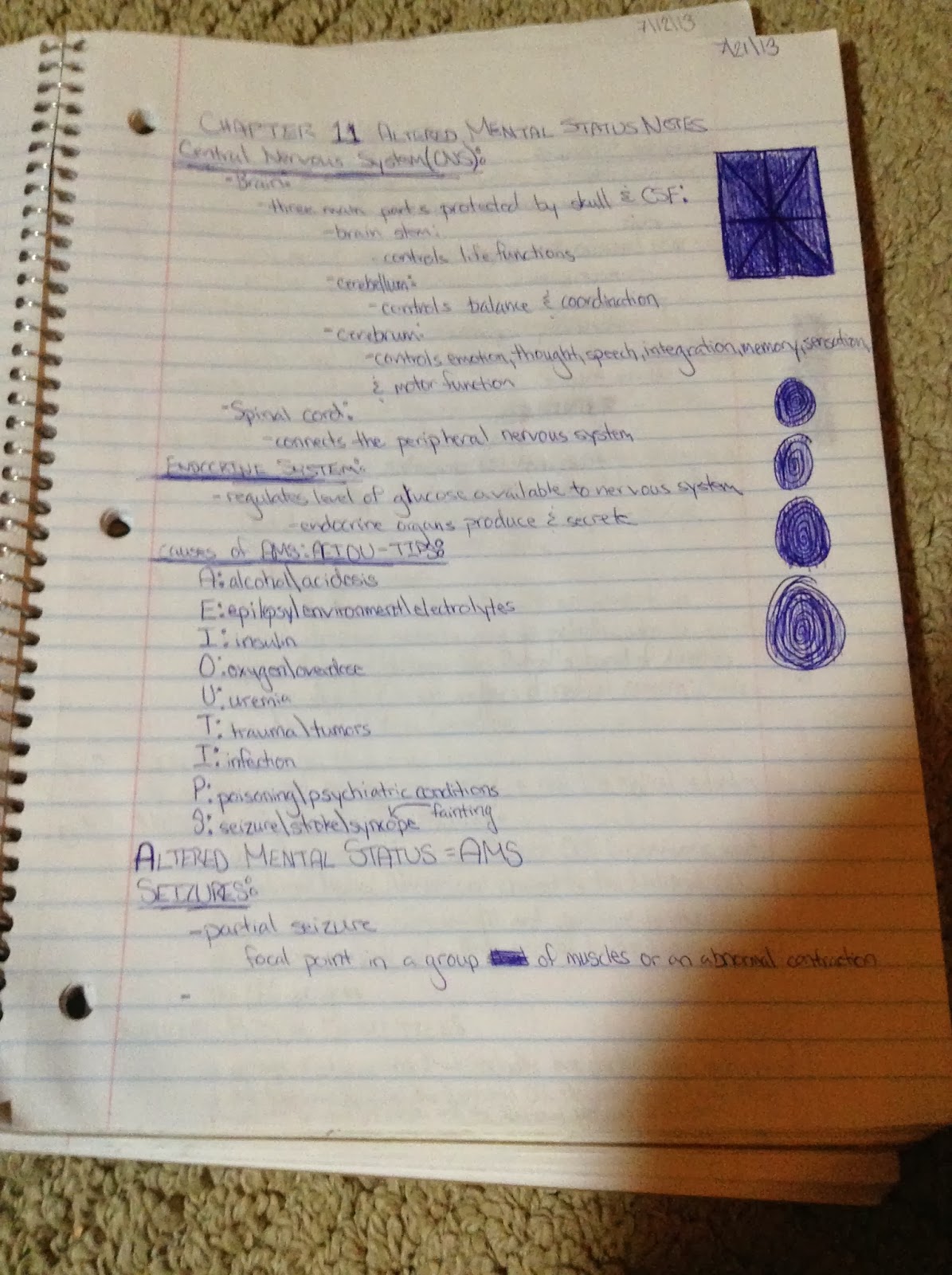
This is a picture of some of the notes I took in my OEC class. 

These are vocabulary words that I wrote down throughout each chapter as I sat down and read the OEC book at home. 

Notes that I took in my OEC class as Trevor lectured.

More vocabulary words.

More notes I took in class on the important acronyms that are now drilled into my brain. 

More notes on important acronyms in the OEC world.

More vocabulary words. 

More notes that I took in class.

Another significant part to my independent component was participating in the class and taking notes on everything that I thought was important, which trust me was A LOT! Taking notes on all the important parts was crucial in order to pass the exams at the end of the class. This helped me pass the class because I went back into my notebook and made notecards on the most important parts so I could study for the end of the class exams. 
  • APPLIED
    How did the component help you understand the foundation of your topic better?  Please include specific examples to illustrate how it helped. 
  • This component helped me understand the foundation of my topic more because without the medical background you're just an average skier, you need the medical background in order to patrol.. For example, before I took the OEC class I thought I was all cool and everything because I was on ski patrol but the only medical background I had was CPR and basic first aid. I thought I could do anything within the scope of ski patrol, but now that I have completed the OEC class I realized that I was completely wrong and I know for a fact that I couldn't run every call without the help of my mentor and/or a fellow patroller even with my OEC certification because I know I still have a lot to learn and need to put my skills to the test in a real scenario. Also, the component showed me how hard it is to become certified and it isn't something you just miraculously earn, you have to work hard for it. For example, when I was taking the OEC class I really didn't see how much time I spent working on things in the class and even how much time I spent in the class but now as I look back on it I realized that I spent countless hours working for that certification card. In order to become a ski patroller you need to be OEC certified, ski patrol isn't just a title you earn! Understanding the medical side of patrol will help build the foundation because you run more calls than anything else in the ski patrol life. For example, even before I took the OEC class I knew patrollers spent their days running numerous calls, but I never knew the extent of it. When I was in class, Trevor told me stories of all the calls they run each day at Mountain High. He told me that as soon as you get done with one call you have another one waiting for you, call after call, you don't even have time to document all the calls until the end of the day, and even then you might be staying after the mountain closes to finish all of your paperwork and look it over. Now that I'm OEC certified and doing mentorship hours I know all the calls that we get. We even get calls for tubing park accidents. One day at my mentorship we got a girl in the patrol room that had flipped over tubing and hit her head and leg. Patrollers really do spend the majority of their time running medical calls and the spare time they have they use on making sure the runs are intact for skiers and snowboarders to use and have fun on. 


Blog 13: Lesson 2 Reflection

Content:


1. Positive Statement

What are you most proud of in your Lesson 2 Presentation and why?
I am most proud of my essential question poster because I spent a lot of time on it and it came out really nicely. Even after redoing it a second time because I spelled "snowboarding" wrong the first time( I forgot the "R") I am proud of it even though it was frustrating. I am also proud of my PowerPoint because it is one of my nicer looking PowerPoints compared to ones previous years.

2. Questions to Consider
       a.     What assessment would you give yourself on your Lesson 2 Presentation (self-assessment)?

       AE       P          AP       CR       NC

       b.     Explain why you deserve that grade using evidence from the Lesson 2 component contract.
I think I deserve this grade because I met all of the requirements on the component contract like turning in the lesson plan templates on time, making an EQ poster and making sure it was visible, I started on time and my materials were ready on time, I addressed my EQ in my introduction, I provided one specific answer to my EQ, I had an activity that involved the whole class and was based off of what I taught in my lesson, and I cleaned up after my presentation.

3. What worked for you in your Lesson 2?
I had everything done almost a week in advance. This was nice because I didn't have to worry about it or stress over it. This helped with the planning of my presentation because I didn't have to be stressed over it and then completely bomb it.

4.  (What didn't work) If you had a time machine, what would you have done differently to improve your Lesson 2?
I forgot a lot of the stuff I was supposed to say because I only rehearsed  twice which wasn't enough because I was lazy. So if I could go back in time I would have rehearsed a lot more so I wouldn't have stumbled a lot. 

5. Finding Value
What do you think your answer #2 is going to be?  
I think my second answer is going to be: "In order to rehabilitate a patient after a traumatic skiing or snowboarding injury you need to know the Mechanism of Injury or the Nature of Illness."

Sunday, January 26, 2014

January: A Month Filled with Action

This month has been filled with a lot of things related to my senior project. First and foremost, I did some mentorship hours in the very beginning of the month. During these hours I helped put fencing back up because it fell due to the thin snow coverage. I also had to pick it back up again because someone came crashing into it and knocked it down. I also helped put up the sight seeing rope to block the snow players from the skiers and snowboarders. I also helped someone in patrol take inventory on the medical supplies to see what we had plenty of and what we needed more of. I also picked up obstacles because the snow coverage is getting thin so there were a lot of rocks. It was a relatively slow time during my mentorship with no injuries or rescues.
Another thing that has happened this month is I finally got my Outdoor Emergency Care Technician certification card. This is really exciting because I first need it for my Independent Component 1 and I get to show it off to my mentor and other fellow patrollers. I'm hoping with this certification and me turning 18 over the summer that I can get a job as patrol at Mt. Baldy or Mountain High for when I come home over breaks or even at a ski resort in Montana.
This is my Outdoor Emergency Care Technician certification card that I got in the mail recently. 
Next, I have been rereading my Outdoor Emergency Care book for extra research to help me out with my 30 minute presentation. I also got another book from the library called Coping with Concussion and Mild Traumatic Brain Injury by Barbara Hill and Diane Stoler. This book focuses on concussions and Traumatic brain Injuries that I'm using for regular research checks. I also found a website, http://www.trauma.org that focuses on different types of trauma like thoracic and abdominal trauma.
The new book that I got from the library that focuses on concussions and traumatic brain injuries. 
My Outdoor Emergency Care book that I'm rereading for information for my 30 minute presentation. 
I have also done my third interview. I interviewed Kelly Wolff
and asked her about her experiences being on ski patrol and being a RN. She gave me a lot of great answers and stories that were interesting. I had a great time interviewing her.
I have some plans for the upcoming months. I plan on contacting my OEC instructor, Trevor Samorajski that I also interviewed for the first interview. During the first interview he mentioned that at Mountain High, where he works, they do shadow a patroller days and I would like to participate in at least one of those. I just need to contact him to see when they are.

Monday, January 13, 2014

Blog 12: Third Interview Questions

Due Date:   Thursday January 16th by 8AM

Content:

Post 10 open-ended questions for approval you want to ask an expert in the field of your senior project.  The first question should be your essential question and the other nine must be about the foundation of your essential question or help you answer your essential question.

1. What is the best way to rehabilitate a patient after a traumatic skiing or snowboarding injury?
2. What experiences have you had with patients and traumatic injuries?
3. What steps did you do to ensure the patient was under the best care possible?
4. How would you help the patient with regaining their mental strength after a traumatic injury?
5. How would you help the patient with regaining their physical strength after a traumatic injury? 
6. What experiences have you had with patients getting Post-Traumatic Stress Disorder(PTSD)?
7. What is the best way to help a patient with Post-Traumatic Stress Disorder(PTSD)?
8. What is the most important step in your assessment and management of the patient before you hand them off to a higher level of care?
9. What can you do to ensure that the patient rehabilitates on time?
10. What struggles have you had with helping a patient recover after a traumatic injury? How did you overcome them? 

Sunday, January 5, 2014

Blog 11: Mentorship 10 Hours

Due Date:  Friday January 10, 2014 by 8AM.

Content:

1.   Where are you doing your mentorship?

I am doing my mentorship at Mt. Baldy Ski Lifts Inc. in the Ski Patrol Department
2.   Who is your contact?

David Mix is my contact. He is the manager of the ski patrol department and my mentor. The ski patrol phone number is: (909) 981-9041
3.   How many total hours have you done (total hours should be reflected in 

your mentorship log located on the right hand side of your blog like your 

WB)?   

I have done a total of 36 hours. 
4.   Summarize the 10 hours of service you did.
Well I have completed more than 10 hours, but I do a lot of the same things each time I go to mentorship. So the 36 hours I have done so far has been with On the Hill Day which is reviewing medical and other skills and going over the hill's protocol as a refresher. I have also put up fencing and rope lines to block of dangerous areas and/or closed areas. I have also done inventory on medical supplies and stocked my vest with necessary medical supplies. I also got to take my friend for a "joy ride" in a toboggan. This was just for practice to learn how to properly handle a toboggan. I also picked up a lot of obstacles such as rocks and pine cones so customers don't get hurt while they ski or snowboard. 

5.   Email your house teacher the name of your contact and their phone 


number confirming who they should call to verify it.  


*You need 50 hours plus the original 10 in the summer by May.   The 

original 10 from the summer do not count toward the 50.  By the end of the 


year, you will have 60 hours counting that original 10.

Blog 10: Senior Project: The Holiday

Content:

1.  It is important to consistently work on your senior project, whether it is break or we are in school.  What did you over the break with your senior project?

I worked on my mentorship hours over Christmas break. I put in 27 hours over my break. So I now have 36 hours. 

2.  What was the most important thing you learned from what you did and why?  What was the source of what you learned?

I learned a lot from my mentor. He had me do a lot of new things that I have never done before. I did inventory on medical supplies and stocked my vest with medical supplies. I also put up fencing and rope lines by myself for the first time ever. Out of these things, I think the most important thing I learned was putting up rope lines up by myself because I've always just watched people do it, so this was the first time I got to prove myself and show my mentor that I could use the drill and put the PVC pipes in and do my clove hitches to attach the rope to the PVC pipes. 

3.  If you were going to do a 10 question interview on questions related to answers of your EQ, who would you talk to and why?

I would either talk to my mentor because he has been the manager of patrol for a few years now and he has been on patrol for a while. If that doesn't work out, I would talk to a former patroller that is now a nurse and works at a volunteer fire department. I would talk to him because he has been in not only the medical field for a long time but also on patrol and he could give me a lot of insight. 

Saturday, December 28, 2013

Mentorship Hours

This month I have been doing a lot of mentorship hours since we actually have snow. My mentorship has been great. I've learned all sorts of new stuff and have gotten to do all sorts of cool stuff. On my first day of mentorship I picked up obstacles and helped put up fencing and rope lines. The next day I went to my mentorship I got to take my friend down in a toboggan. This was just plain awesome! It was really fun because my mentor was egging me on to go faster and my friend was just in the toboggan screaming the entire time. I also refilled my vest with medical supplies. Some of the medical supplies that I included were bandaids, slings, roller gauze, medical tape, and trauma blankets. This made my vest so much fatter and heavier, but that's a good thing. The next day I went up was on Christmas for a couple of hours and I helped put up rope lines and clear off obstacles off the runs. I got to practice my clove hitch knots for this because its the knot we use to put up rope lines. The last day I went up, I trained a new guy. I showed him around and where all the runs were even though they aren't open. I showed him what to do like pick up obstacles, make sure people that are laying down on the runs are okay, make sure all of the fencing and rope lines are up when you go by them, and make sure everything is good to go. I also got to use my own radio for the very first time. This was interesting because it's a really heavy radio and I put it in my radio harness and every time someone would talk over it I got scared because I forgot it was there. I also blocked off the terrain park while they groomed it. At first I blocked it off physically because I was waiting for a drill. Then I put up rope lines and got to use the drill for the very first time. I drilled holes in the snow and then put PVC pipes and bamboo in the holes and then secured rope to the pipes and bamboo by using the clove hitch knot. 

Here's a link to the video of me taking my friend down in the toboggan:
https://docs.google.com/file/d/0B0VxWzGQBDFaVjBzdEN6WUxpNjQ/edit

All the supplies in my vest. There is a trauma blanket, 8 4x4 gauze pads, 4 rolls of gauze, 3 rolls of medical tape, an assortment of bandaids, 3 pairs of gloves, a wet wipe, 6 carabiners, 2 pocket knifes, 1 whistle, and 2 mouth pieces for CPR.  

This is the fencing I helped put up. This is used for making sure customers don't go into areas they aren't supposed to. In this case it's used to block off the gulch that isn't covered in snow.